
Hydro Jetting Versus Snaking: Which Works Best?
- Marcos Lezcano
- 2 days ago
- 5 min read

A bathroom sink that drains slowly may need a straightforward cable cleaning. A sewer line backing up into a shower, or a restaurant drain repeatedly filling with grease, calls for a closer look. In the question of hydro jetting versus snaking, the better choice depends on what is blocking the pipe, where the blockage is located, and whether the line is in sound condition.
Both methods are proven ways to restore drainage. They work very differently, though. Choosing the right approach can mean the difference between a quick temporary opening and a cleaner pipe with fewer repeat clogs.
Hydro Jetting Versus Snaking: The Main Difference
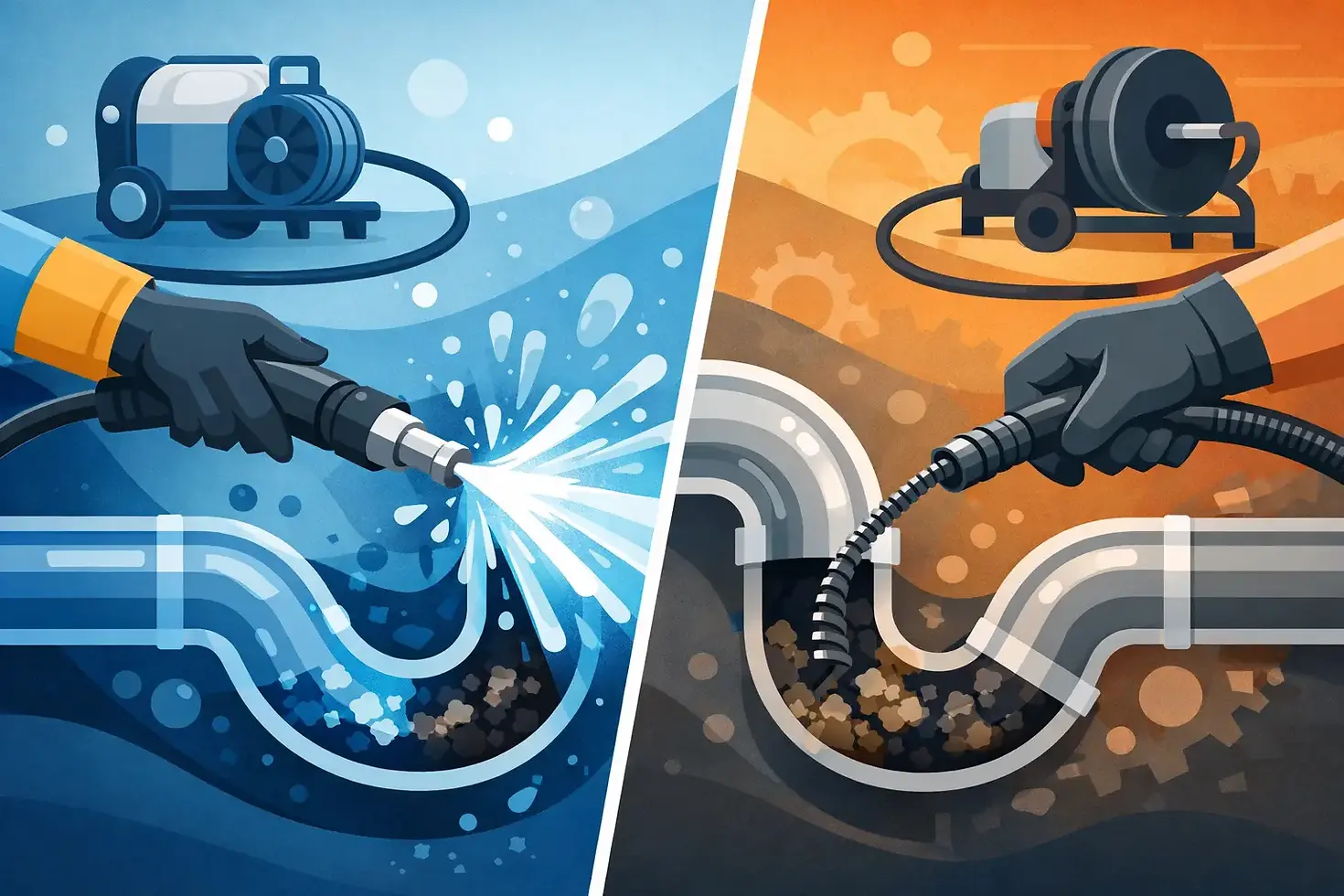
Drain snaking uses a flexible metal cable with a cutting or retrieval head. A licensed plumber feeds the cable into the drain and rotates it to break through an obstruction, pull out debris, or create an opening for water to pass. It is a targeted mechanical method that has been used successfully for many years.
Hydro jetting uses a specialized hose and nozzle to send high-pressure water through the pipe. The water cuts through sludge, grease, soap buildup, scale, loose debris, and many root intrusions. Instead of simply opening a path through the clog, it can wash buildup from much of the pipe wall and carry debris downstream.
Neither service is automatically the right answer for every clog. A professional assessment, often supported by a sewer camera inspection, identifies the blockage and helps confirm that the pipe can safely handle the chosen method.
When Drain Snaking Is the Better Choice
Snaking is often the practical first response for a localized clog. For example, hair and soap can collect near a bathroom sink or tub drain, and a cable can often remove or break apart the blockage quickly. It is also useful when an object has entered a drain and needs to be retrieved rather than flushed farther into the plumbing system.
A toilet clog may also be a good candidate for snaking, particularly when the blockage is close to the fixture. A plumber can use the right equipment to protect the porcelain while reaching through the toilet trap.
Snaking may be preferred when a line is old, damaged, collapsed, or made from materials that need careful evaluation. High-pressure water should not be used blindly in a compromised pipe. If a camera inspection reveals cracks, separated joints, severe corrosion, or a collapse, drain cleaning alone may not solve the underlying problem.
The limitation is that a snake commonly creates a hole through the obstruction rather than fully cleaning the inside of the pipe. Water starts moving again, but grease, scale, and residue can remain along the walls. That is why a drain that has been snaked may clog again sooner when there is significant buildup farther down the line.
When Hydro Jetting Makes More Sense
Hydro jetting is often the stronger option for recurring clogs and heavy buildup. Kitchen drains are a common example. Cooking grease, food particles, detergent residue, and soap can form a thick coating over time. A cable may punch through it, but hydro jetting can scour that material away more thoroughly.
It is also valuable for main sewer lines with recurring root intrusion. Tree roots naturally seek moisture and can enter small openings at pipe joints or cracks. Hydro jetting can cut through many roots and clear the debris from the line, restoring flow. However, it does not repair the opening that allowed roots to enter. If roots return repeatedly, the sewer line may need repair or replacement to provide a lasting solution.
For Palm Beach County homes, outdoor drains and sewer lines can collect sand, soil, leaves, and other debris after heavy rain. Commercial kitchens face another challenge: grease accumulation that can slow drainage, create odors, and disrupt daily operations. In these situations, hydro jetting can be an effective part of preventive maintenance, not just an emergency response.
A well-performed hydro jetting service requires the right nozzle, controlled water pressure, and an experienced technician. More pressure is not always better. The goal is to clean effectively without putting unnecessary stress on the plumbing system.
A Camera Inspection Helps Protect Your Pipes
Before hydro jetting a main line, a camera inspection is often the responsible next step. It lets the plumber see the pipe interior, locate the clog, check for roots, and identify damage that could affect the recommended service.
This is especially helpful in older homes, properties with a history of sewer issues, and commercial buildings with high drain use. A camera can distinguish between a grease blockage, root intrusion, a sagging pipe, a broken section, or a foreign object. Each issue requires a different plan.
Cost, Results, and Long-Term Value
Snaking usually has a lower upfront cost because the equipment and service time are often simpler. For a one-time, accessible clog, it can provide excellent value. There is no reason to use hydro jetting for every slow drain if a basic obstruction can be safely removed with a cable.
Hydro jetting generally costs more, but it can deliver greater long-term value when residue throughout the line is causing repeated backups. A more thorough cleaning may reduce the frequency of service calls, protect business operations, and help homeowners avoid the frustration of another backup shortly after a drain was cleared.
The key is not to choose based on price alone. A low-cost service that only temporarily restores drainage can become more expensive if the clog returns several times. On the other hand, paying for hydro jetting when the real issue is a damaged sewer pipe may not solve the problem either. Honest diagnosis comes first.
Signs You May Need More Than a Simple Snake
A single slow fixture does not always point to a main sewer problem. But when several drains slow down at once, toilets bubble, water backs up into a tub or shower, or sewage odors appear, the blockage may be deeper in the system.
Recurring kitchen clogs can indicate grease buildup, while repeated backups after rain may suggest roots, pipe damage, or debris entering an outdoor line. For commercial properties, slow drains, floor drain backups, and frequent grease-trap concerns should be addressed before they interrupt service or create sanitation concerns.
Do not rely on repeated chemical drain cleaners to solve these problems. Harsh products may damage pipes, create hazards for the person working on the drain later, and rarely remove the full source of a heavy blockage. A professional inspection provides a safer, clearer path forward.
Choosing the Right Drain-Cleaning Service
The best drain-cleaning decision starts with the condition of your system, not a one-size-fits-all recommendation. A skilled plumber should ask about the history of the problem, inspect the affected drains, and explain whether snaking, hydro jetting, camera inspection, repair, or a combination of services is appropriate.
Shalom Plumbing & Septic helps Palm Beach County homeowners and businesses address urgent clogs with trained, licensed service and straightforward recommendations. Whether the problem is a small fixture blockage or a recurring sewer-line backup, the goal is to restore reliable drainage while helping prevent the next disruption.
If your drains keep slowing down after being cleared, do not settle for another temporary opening. A proper diagnosis can show what is inside the line and help you choose a solution that protects your property, your schedule, and your peace of mind.


Comments